


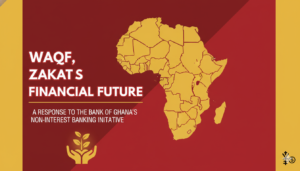
The Bank of Ghana has recently engaged with faith-based leaders to deliberate on the development of a Non-Interest Banking & Finance (NIBF) framework. This marks a historic step in broadening Ghana’s financial landscape, offering inclusive, ethical, and Shariah-compliant alternatives that can benefit millions of Ghanaians.
At Awqaf Africa, we view this milestone as an opportunity to integrate the centuries-old practice of waqf (endowment) into modern non-interest financial systems. Waqf is not merely a charitable tool; it is a powerful economic engine that has historically sustained education, healthcare, trade, and social welfare across Muslim societies.
🌿 Qur’anic Foundations for Non-Interest Finance & Waqf
Allah ﷻ clearly prohibits exploitative financial systems based on riba (interest):
﴾وَأَحَلَّ ٱللَّهُ ٱلۡبَيۡعَ وَحَرَّمَ ٱلرِّبَوٰا﴿
“Allah has permitted trade and forbidden usury (riba).” (Qur’an 2:275)
And He commands believers to establish systems of charity and mutual support:
﴾وَفِيٓ أَمۡوَٰلِهِمۡ حَقّٞ لِّلسَّآئِلِ وَٱلۡمَحۡرُومِ﴿
“And in their wealth was a recognized right for the beggar and the deprived.” (Qur’an 51:19)
These verses remind us that finance must serve society, not exploit it. Waqf is one of the practical embodiments of this divine command.
🌟 Prophetic Guidance
The Messenger of Allah ﷺ said:
«إِذَا مَاتَ الإِنْسَانُ انْقَطَعَ عَنْهُ عَمَلُهُ إِلاَّ مِنْ ثَلاثٍ: صَدَقَةٍ جَارِيَةٍ، أَوْ عِلْمٍ يُنْتَفَعُ بِهِ، أَوْ وَلَدٍ صَالِحٍ يَدْعُو لَهُ»
“When a person dies, his deeds come to an end except for three: ongoing charity (sadaqah jariyah), knowledge that benefits others, or a righteous child who prays for him.” (Sahih Muslim)
Waqf is the most enduring form of sadaqah jariyah, ensuring perpetual benefit for communities.
Another hadith states:
«مَنْ فَرَّجَ عَنْ مُسْلِمٍ كُرْبَةً مِنْ كُرَبِ الدُّنْيَا، فَرَّجَ اللَّهُ عَنْهُ كُرْبَةً مِنْ كُرَبِ يَوْمِ الْقِيَامَةِ»
“Whoever relieves a believer’s hardship of this world, Allah will relieve him of a hardship of the Day of Judgment.” (Sahih Muslim)
Non-interest finance and waqf projects relieve people’s economic burdens, fulfilling this Prophetic vision.
🕌 Classical Scholarship & Madhhab Perspectives
Imam al-Shāfiʿī (رحمه الله) emphasized that waqf is not only recommended but a noble means to safeguard wealth while ensuring continuous benefit for society. He viewed it as a structured method to transform private assets into perpetual public good.
Imam Mālik (رحمه الله) — whose madhhab historically guided much of Africa — affirmed that waqf is a vital social institution. In his al-Muwaṭṭa’, reports of companions’ waqf practices (such as ʿUmar ibn al-Khaṭṭāb’s land endowment in Khaybar) demonstrate its legitimacy and power in supporting communities.
Thus, both African and Asian scholarly traditions converge on the centrality of waqf as a financial backbone for society.
👩🏽🦱 A Story from Kejetia Market
Amina, a market woman in Kumasi’s Kejetia, works long hours selling vegetables. When her son fell ill, she struggled to afford medical bills. If a waqf-funded community clinic existed in the market, Amina could access affordable healthcare.
At the same time, with a small zakat-backed, interest-free loan, she could buy a refrigerator to preserve her vegetables, reducing waste and doubling her income. This is how waqf and non-interest finance transform lives — directly, practically, and sustainably.
🛠 Awqaf Africa’s Proposal
- Waqf-funded Community Clinic in Kejetia
- Zakat-backed Microcredit Fund for traders and youth
Governance by a Shariah-compliant Waqf Board, including community and regulatory oversight
Impact Indicators: patients served, loans disbursed, jobs created
📢 A Call to Partnership
We commend the Bank of Ghana’s leadership in opening this dialogue with faith-based leaders. Awqaf Africa stands ready to:
- Provide technical design of waqf–zakat instruments
- Mobilize grassroots participation through our networks
- Align outcomes with SDGs and Maqasid al-Shariah
- Share best practices from Africa and Asia
🌍 The Future is African
As former President John Dramani Mahama reminded the world at the UN: “The Future is African.”
By embracing non-interest finance and integrating waqf, Ghana can lead the continent in pioneering ethical, inclusive, and sustainable economic systems that reflect Africa’s values and aspirations.
Awqaf Africa is committed to working with regulators, communities, and international partners to ensure that waqf becomes a central pillar of Ghana’s non-interest financial future.
📩 For collaboration or enquiries, contact:
Ibrahim Abdul Mugis
President, Awqaf Africa
president@awqafafrica.org
📑 References
Qur’an
- Qur’an 2:275 – ﴾وَأَحَلَّ ٱللَّهُ ٱلۡبَيۡعَ وَحَرَّمَ ٱلرِّبَوٰا﴿
- Qur’an 51:19 – ﴾وَفِيٓ أَمۡوَٰلِهِمۡ حَقّٞ لِّلسَّآئِلِ وَٱلۡمَحۡرُومِ﴿
- Qur’an 2:110 – ﴾وَأَقِيمُوا۟ ٱلصَّلَوٰةَ وَءَاتُوا۟ ٱلزَّكَوٰةَ…﴿
- Qur’an 9:60 – ﴾إِنَّمَا ٱلصَّدَقَـٰتُ لِلْفُقَرَآءِ وَٱلْمَسَـٰكِينِ…﴿
Hadith
- Sahih Muslim – “When a person dies, his deeds come to an end except three…”
- Sahih Muslim – “Whoever relieves a believer’s hardship of this world…”
- Sahih al-Bukhari – On giving to the poor and needy as a duty upon wealth
- Report of ʿUmar’s waqf at Khaybar (Muslim/Bukhari)
Madhhab Scholarship
- Imām al-Shāfiʿī – al-Umm: waqf as perpetual ṣadaqah binding upon the community
- Imām Mālik – al-Muwaṭṭa’ & al-Mudawwanah al-Kubrá: waqf (ḥabs) as perpetual dedication of property for public good
Policy & BoG Sources
- Bank of Ghana. Governor’s Opening Remarks – Stakeholder Engagement with Members of the Clergy on Non-Interest Banking and Finance (18 September 2025). bog.gov.gh
- Ghana Business News. BoG Develops Comprehensive Framework to Guide Non-Interest Banking Sector (20 July 2025). ghanabusinessnews.com
- Ghana Business News. Bank of Ghana Engages Religious Leaders on Non-Interest Banking and Finance (23 September 2025). ghanabusinessnews.com
- Ghanaian Times. Analysis of Ghana’s Banks and Specialised Deposit-Taking Institutions Act, 2016 (Act 930): Readiness for NIBF (2022). ghanaiantimes.com.gh
- Graphic Online. BoG Consults Religious Leaders on Developing Inclusive Regulatory Framework for Rollout of NIBF (22 September 2025). graphic.com.gh




Leave a Reply